

Singapore is compact, fast and famously well connected, which makes it one of the easiest places in the world to stay online, provided you arrive already set up rather than scrambling at Changi. Whether you are here for a long weekend of hawker centres and gardens, a business trip packed with meetings, or a stopover between long-haul flights, a Singapore eSIM lets you land, clear immigration and immediately order a ride, check into your hotel and message home without touching a SIM tray. This guide covers what to expect from coverage in a dense city-state, how to size data for the kind of short, intense visit Singapore usually is, and how to have everything ready before you board.
Photo: Vacation Travel Insider / Unsplash
Why an eSIM suits Singapore especially well
An eSIM is a SIM built into your phone's software rather than a plastic card. You load a data profile onto the chip already inside your device, so you can buy and install a plan before you travel and keep your home number active for calls and verification codes. Singapore is a place where that convenience really shines: it is a major transit hub, trips are often short, and the last thing you want after a long flight is to queue for a physical SIM. GetSim offers data-first plans across 190+ destinations, all handled in one app with a single shared prepaid wallet. The plan card shows the network, data, validity and price before you pay, and if a stopover turns into a longer stay you top up the same plan without reinstalling it.
Coverage in a dense, connected city-state
Singapore is small and heavily urbanised, and its mobile networks reflect that: data is dense and dependable across the island, from the Marina Bay waterfront to the residential heartlands, and even underground on the MRT you will generally stay connected. The market has the familiar three-operator shape, a nationwide leader, a strong challenger and a competitive third operator, and a travel eSIM connects to a partner network, so you benefit from that competition without choosing a brand yourself. The diagram shows the pattern.
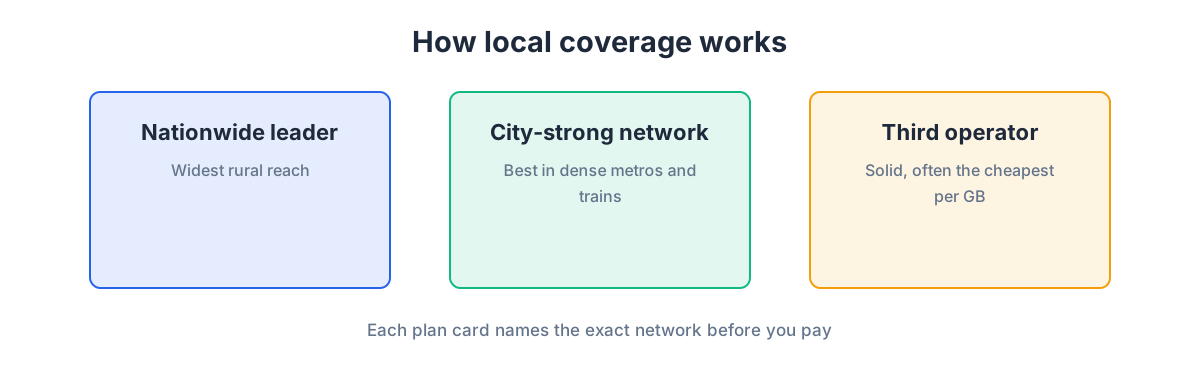
Because the country is so compact and urban, there are very few coverage weak spots of the kind you would worry about in a large country. You are unlikely to find yourself without signal on Sentosa, in the Botanic Gardens or out at Changi. The main things to plan for are not gaps but crossings: if your trip includes a hop across to Malaysia, say a day out to Johor Bahru, remember that a Singapore plan covers Singapore, and you would want a separate Malaysia plan or a regional plan for that leg. For a wider Southeast Asia loop, our Thailand eSIM guide is a useful companion, and the regional options may cover several countries at once.
Right-sizing data for a short, busy trip
Singapore trips tend to be short and packed, which changes the data maths. You are unlikely to burn through a huge allowance in three or four days of maps, messaging, food photos and the occasional video call, unless you stream heavily in the hotel or hotspot a laptop for work. The budget diagram sorts usage into light, medium and heavy lanes so you can match a plan to a short stay without overbuying.
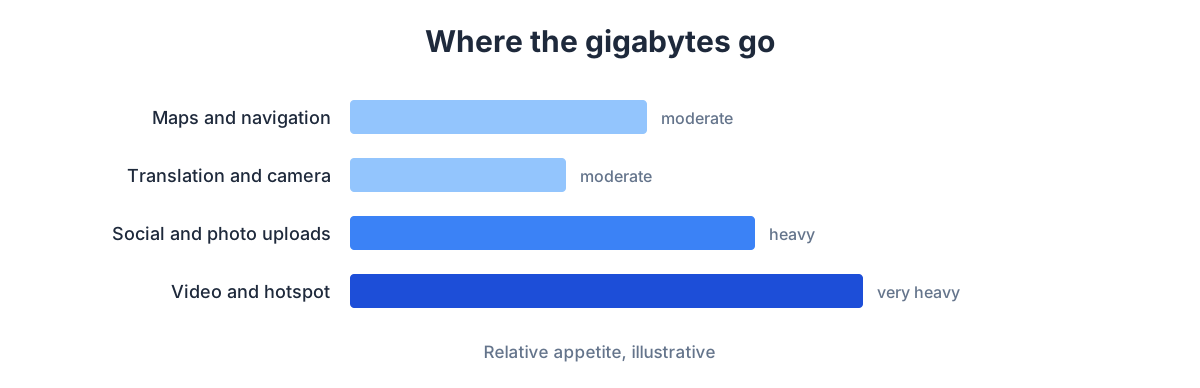
For most visitors on a city break, a small plan comfortably covers navigation, ride-hailing, translation, social posts and a daily check-in home. If you plan to video-call often, stream shows in the evening, or work remotely and hotspot a laptop, step up a size. Because trips here are short, a common smart move is to buy a modest plan and rely on the shared prepaid wallet to top up in a minute if you are busier online than expected, rather than paying up front for data you may never use.
Matching your visit to a plan
| Visit type | Typical usage | Approach |
|---|---|---|
| Long-haul stopover (1-2 days) | Maps, ride-hailing, quick messages | Small plan |
| Weekend city break | Navigation, food photos, social | Small to mid plan |
| Business trip | Email, video meetings, hotspot | Mid to large plan |
| Longer leisure stay | Daily video calls, some streaming | Mid plan, top up if needed |
| Singapore plus Malaysia day trip | Cross-border coverage | Separate Malaysia or regional plan |
Getting set up before you fly
Install your Singapore eSIM at home over your own Wi-Fi before departure. Because you are travelling to Singapore from elsewhere, you can prepare it in advance, keep it dormant, and switch it on the moment you land, ideal for a stopover where minutes matter.
- Confirm your phone supports eSIM. Most recent iPhones, Pixels and Galaxy S models do; if unsure, our guide on checking eSIM support shows the quick test.
- Buy the Singapore plan in the GetSim app, where the card shows network, data, validity and price before payment.
- Install the profile over home Wi-Fi. The app guides you, and the eSIM lands in your cellular or SIM settings.
- Name it something like "Singapore data" so it is easy to manage.
- Keep its data off until you arrive, then turn it on at Changi and set it as your data line.
For a detailed walkthrough on both platforms, see the install guide. Keep your home SIM in the phone for calls and codes and let the Singapore data plan carry the internet the moment you step off the plane.
Neighbourhood by neighbourhood, and the transit factor
Because Singapore is so compact, coverage is not really the variable it is in a large country, but the way you use data does shift by district. Around Marina Bay, Orchard Road and the Civic District you are constantly reaching for maps, restaurant listings and photo uploads, so this is where your allowance actually gets used. In the heritage quarters, Chinatown, Little India, Kampong Glam, translation apps and menu photos add a little more. Out at Sentosa and the southern islands, and in the greenery of the Botanic Gardens or the Southern Ridges, you are more likely to be filming than browsing, so short bursts of video are the main draw on your plan.
The transit system is the quiet hero of a Singapore trip, and it is worth knowing your eSIM generally keeps working underground on the MRT, which means you can plan the next hop, message ahead to a restaurant or catch up on messages while you travel between sights. Changi Airport itself, where many stopover trips begin and end, is thoroughly covered, so activating your eSIM the moment you land and immediately booking a ride or checking a connecting gate is completely realistic. For travellers on a tight layover, that instant-on connection is often the whole point of arranging the eSIM in advance rather than gambling on finding time to buy a SIM between flights.
eSIM versus a SIM at the airport
Singapore is one of the easier places to buy a physical SIM, but the eSIM still wins on friction for most visitors, and it is worth saying why plainly. A counter SIM means queuing after your flight, sometimes registering with your passport, swapping your home card and keeping it safe, time you would rather spend on the first hawker meal or, on a stopover, simply do not have. An eSIM you set up at home skips all of that: you land, switch it on, and you are connected before you reach the taxi rank. The plan card shows network, data, validity and price before you pay, so there is no uncertainty at the point of purchase.
Keeping your home SIM in the phone also means the verification codes and bank messages tied to your usual number keep arriving, which matters when you are confirming a hotel, authorising a card or booking onward travel. Swapping to a full physical SIM can quietly interrupt exactly those texts. Running the eSIM for data while your home line handles identity is the least troublesome setup, and with everything in one shared prepaid wallet, your next stop on a regional trip is a quick top-up rather than another queue.
Practical tips for a smooth stay
Even in a place this well connected, a few habits help. Use hotel and cafe Wi-Fi for photo backups, app updates and long video calls to keep your travel plan lean. Download an offline map of the island anyway, it makes navigating the MRT and finding hawker stalls quick even in a packed food court. If you are travelling as a pair on a short trip, one plan shared by hotspot can be simpler than two, keeping in mind hotspotting spends data faster.
A couple of reassurances worth knowing: an unused, unactivated plan is refundable within seven days, so buying ahead of a stopover that might change carries little risk. And because the travel plan is data-only, if you need a number to receive a booking confirmation or a two-factor code, you can add a receive-only virtual number alongside it.
What you will actually use your connection for
Singapore trips are short and dense, so it helps to picture exactly where the data goes. From the moment you land at Changi, you will want a ride-hailing app to reach the hotel, then maps to thread between the Marina Bay sights, hawker centres and gardens. Throughout the day it is the small, constant things: checking opening hours, translating the odd dish name, looking up which MRT line reaches the Botanic Gardens, and sharing a steady stream of photos of a city that is endlessly photogenic. Business visitors add email, video meetings and the occasional laptop hotspot between appointments, which is the main reason to size up from a small plan.
Because the trip is usually brief, the smart pattern is to start modest and lean on the shared prepaid wallet if you turn out to be online more than expected, adding data in the app in about a minute rather than paying up front for gigabytes a stopover may never touch. For a fuller look at matching an allowance to how you travel, our guide on how much data you need for a trip is worth a read, and if you are deciding between an eSIM and switching on your home carrier's roaming for a short visit, the eSIM versus roaming comparison weighs the options plainly. Either way, arranging the connection before you fly is what turns a tight Singapore schedule from stressful into smooth.
Frequently asked questions
Is coverage good across Singapore?
Yes. The island is dense and heavily urbanised, so data is reliable almost everywhere, including much of the MRT. Coverage gaps are rarely a concern here.
Does a Singapore plan cover Malaysia?
No. It covers Singapore. For a day trip to Johor Bahru or a wider trip, choose a Malaysia plan or a regional plan that covers both.
How much data do I need for a stopover?
For a day or two of maps, ride-hailing and messaging, a small plan is plenty. Top up in the app if you end up online more than expected.
Can I keep my home number?
Yes. Your home SIM stays in the phone for calls and texts while the eSIM handles data. You choose the data line in settings.
Should I set it up at the airport?
No, do it at home over Wi-Fi before you fly, then activate on arrival. That is faster and far less stressful, especially on a tight stopover.
What if my stopover gets cancelled or changes?
An unused, unactivated plan is refundable within seven days, so buying ahead of a stopover that might change is low-risk. Just hold off activating the eSIM until you are actually on the ground in Singapore, since activation starts the plan.
Can I use one plan across a whole regional trip?
A Singapore plan covers Singapore specifically. For a multi-country route through Southeast Asia, a regional plan can cover several countries at once, and everything sits in the same shared prepaid wallet so topping up is quick wherever you are.
Land ready in Singapore
Singapore is one of the smoothest destinations to stay connected in, and an eSIM makes it smoother still: no counter, no card, just data live from the moment you land. Explore the available eSIM plans, confirm Singapore on the countries page, and if you are threading a wider regional route, the regional plans can cover several countries on one plan. New to the whole idea? Our explainer on what an eSIM is covers the essentials in plain language before you buy.
Ready when you are
Put this guide to use on your next trip
Travel eSIMs that install in minutes and keep your home SIM active.