
"How many gigabytes should I buy?" is the question that stalls most people at the checkout. Buy too little and you are rationing maps on day three; buy too much and you paid for data you never touched. The good news is that data use abroad is surprisingly predictable once you break your day into the handful of things a phone actually does. This guide turns that into real numbers you can plan around, then shows how to match them to a plan without guessing.
The honest headline: most leisure travelers need far less than they fear. If your accommodation has Wi-Fi, the mobile data is only carrying you between those Wi-Fi islands, and that gap is smaller than it feels. Let us put figures on it.
What actually eats data on a trip
Different activities sit in wildly different weight classes. Knowing which ones are light and which are heavy is most of the battle.
- Maps and navigation. Very light. Following a route sips data, and if you download the area offline the night before, live navigation costs almost nothing. Figure a small fraction of a gigabyte a day even with heavy use.
- Messaging and email. Light. Text, the occasional photo, voice notes. This barely registers over a week.
- Social feeds. Medium, and sneaky. Scrolling itself is modest, but autoplaying videos in the feed quietly multiply it. Turning off autoplay is the single biggest saving most people can make.
- Web, tickets and translation. Light to medium. Looking up opening hours, buying a museum ticket, pointing a camera translator at a menu.
- Music and podcasts. Medium if streamed, near zero if downloaded on Wi-Fi first.
- Video calls and streaming. Heavy. A long video call home or an evening of streaming a show is where gigabytes disappear. This is the category to be honest with yourself about.
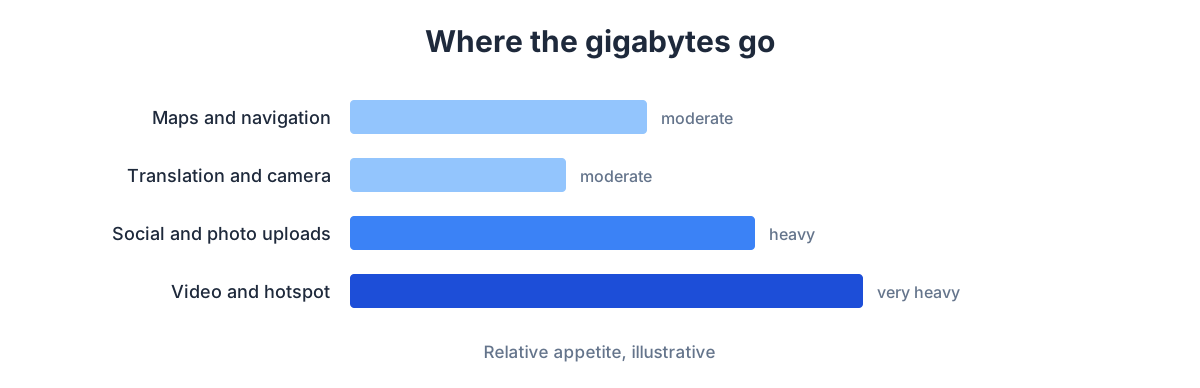
The chart below sorts a typical day's activities by how much they draw, which makes the heavy hitters obvious at a glance.
Why data feels scarier than it is
People overestimate their travel data needs for a simple reason: they think about their phone use at home, where an always-on connection streams music all day, backs up every photo the moment it is taken, and autoplays video endlessly. At home that is free and invisible, so it never registers as "usage". On a trip, two things change that quietly shrink the number. First, you are out doing things, not sitting on the sofa scrolling. A day at a museum, a hike, or a long lunch is a day your phone is mostly in your pocket. Second, you sleep somewhere with Wi-Fi, and that is where the heavy tasks naturally happen anyway, uploading the day's photos and downloading tomorrow's entertainment. Strip those out and what is left for mobile data is the in-between: navigating, checking something quickly, sharing a photo, a message here and there. It adds up to less than the fear suggests.
This is why the advice below leans toward "buy a sensible amount and keep the option to top up" rather than "buy the biggest plan to be safe". Oversizing is the most common and least necessary mistake. The goal is to match the plan to how you genuinely behave abroad, not to how your phone behaves at home on unlimited Wi-Fi.
A worked example day
Picture a normal sightseeing day to make it concrete. You wake in a hotel and, on the Wi-Fi, download the city map area offline and queue a couple of podcasts. You head out; navigation runs all morning but, being cached, sips almost nothing. You check opening hours a few times, message the friend you are meeting, and translate a menu at lunch, all light. Mid-afternoon you post a few photos and a short clip to a social app, which is the day's biggest single draw but still modest. A quick five-minute video call home in the evening adds a little more. Back at the hotel, you back up the day's photos and stream a show, both on Wi-Fi, so neither touches your plan. That whole day lands in the light-to-everyday range. Multiply it across a week and you can see why a mid-sized plan comfortably carries most travelers, with the heavy days being the ones where you streamed or called a lot on the move.
Three traveler profiles
Rather than a single number, it helps to find yourself in one of three patterns. These assume you have Wi-Fi where you sleep, which almost everyone does.
The light traveler
You use the phone for maps, messaging, the odd photo upload and looking things up. You do your scrolling and streaming back at the hotel on Wi-Fi. Over a week this profile stays comfortably in the low single-digit gigabytes. A modest plan covers you with room to spare, and you will likely come home with data unused.
The everyday traveler
Same as above, plus real social media use out and about, some music streaming on the move, sharing stories and photos through the day, and occasional short video calls. This is where most people actually land. A mid-sized plan fits this rhythm for a week to ten days.
The heavy traveler
You treat mobile data like home Wi-Fi: streaming shows on the train, long daily video calls, uploading large photo and video sets, maybe tethering a laptop for work. Your use dwarfs the other two profiles. Either buy a large allowance up front, or plan to top up along the way, which is painless since you can add data in-app without reinstalling anything.
A decision path for picking your size
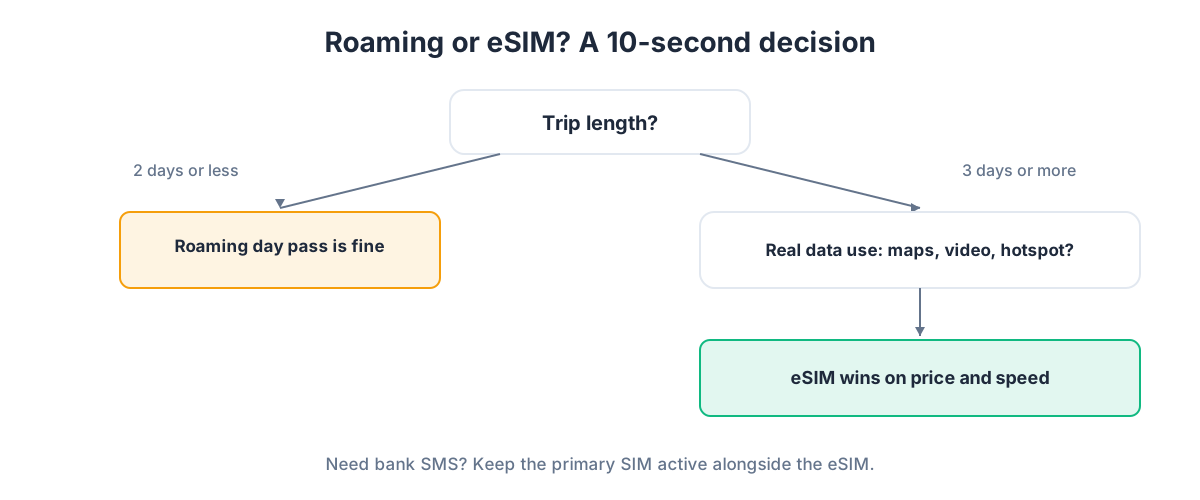
If the profiles still leave you unsure, walk the decision flow below. It routes you from a couple of honest questions about your habits and trip length to a sensible allowance, without pretending your exact number can be known in advance.
Length of trip changes the maths
A weekend and a month are different problems. For a short city break, err slightly generous, because the cost of running out on a two-day trip is high and the extra data is cheap insurance. For a long trip, the smarter move is often a moderate plan plus the confidence that topping up is trivial. You avoid pre-paying for weeks of data you might not reach, and you refill only if and when you actually need it. Because the balance is one shared prepaid wallet, a top-up during week three uses the same funds and the same plan with no fresh setup.
A quick reference for planning:
| Trip | Light traveler | Everyday traveler | Heavy traveler |
|---|---|---|---|
| Weekend (2-3 days) | Small plan, plenty spare | Small to medium plan | Medium plan or top up |
| One week | Small to medium plan | Medium plan | Large plan or plan to top up |
| Two weeks | Medium plan | Medium to large plan | Large plan plus top-ups |
| A month or more | Medium plan, top up if needed | Large plan, top up as you go | Large plan, expect regular top-ups |
Because the plan card shows the data amount and validity before you pay, you can line the allowance up against your trip length right there and adjust before committing.
Five habits that stretch any allowance
Whatever size you land on, these habits make it go further, and they are the difference between a plan that lasts and one that does not.
- Download maps offline before you go. Navigation then costs almost nothing, and it works even in a dead spot.
- Turn off video autoplay in your social apps. This alone can halve a heavy day.
- Download music, podcasts and shows on Wi-Fi the night before. Enjoy them on the move for free.
- Do big uploads on Wi-Fi. Back up the day's photos from the hotel, not from a cafe on mobile data.
- Check your usage counter mid-trip. A ten-second glance tells you whether to relax or top up, long before you are stranded.
Travelling as a group or a family
Sizing changes when more than one person depends on the same connection. If you are the designated navigator and hotspot for a family, your phone is carrying everyone's maps and the kids' occasional video, so you should size up from your solo figure. The alternative, and often the tidier one, is a plan per phone so no single device becomes the bottleneck and nobody's afternoon dies because the hotspot ran dry. Because every plan draws from the same shared prepaid wallet, buying two or three modest plans for a family is straightforward and keeps each person independent. For a group hopping across a region together, a regional plan on each phone keeps everyone covered across borders on one allowance apiece.
Watch the validity, not just the gigabytes
Data amount is only half the plan; validity is the other half, and it is easy to fixate on gigabytes and forget the clock. A large allowance with a short validity window can expire before a slow-paced long trip finishes, while a modest allowance with a longer window may suit a relaxed traveler better. The plan card shows both the data and the validity before you pay, so read them together. Match the validity to how long you will actually be away, and the data to how you will actually use the phone. On most plans the validity begins counting from first use, which is why installing early for a non-Türkiye trip does not quietly burn your window before you have even landed.
Data-only plans and what that means for calls
Most travel plans, including GetSim's, are data-only. That is not a limitation for the way people travel now; it just means voice and texts ride over the internet through the apps you already use. A video or voice call through a messaging app comes out of your data allowance, which is why heavy callers should size up. If what you specifically need is a real number to receive calls or verification texts, that is a separate product: a receive-only virtual number, which you can run alongside a data plan.
Buying the right amount without overthinking it
When you are ready, browse plans for your destination on the eSIM countries pages, or start from the eSIM hub. Multi-country trip? A regional plan pools one allowance across the whole area, which is usually simpler than sizing several small plans. Pick the size your profile suggests, lean slightly generous for short trips, and lean moderate-plus-top-up for long ones. If you have not installed an eSIM before, our installation guide covers the setup, and what an eSIM is explains the basics.
Frequently asked questions
Is 1 GB enough for a week abroad?
For a genuinely light traveler who does all their streaming on hotel Wi-Fi and mostly uses maps and messaging out and about, it can be. For most everyday travelers who use social media and stream a little on the move, a larger allowance is more comfortable. When unsure, size up slightly and rely on the ability to top up.
What uses the most data without me realising?
Autoplaying video in social feeds, background app refresh, and cloud photo backup running over mobile data. Turning those off protects your allowance more than any other single change.
Can I add more data if I run out?
Yes. You top up in the app without reinstalling the profile, and the new data joins the same shared prepaid wallet immediately. This is why buying a moderate plan for a long trip works so well.
Does using maps abroad cost a lot?
Very little, especially if you download the area for offline use before you leave. Navigation is one of the lightest things you can do on a travel plan.
How do I check how much data I have used mid-trip?
Your phone keeps a running counter in its cellular or mobile data settings, and the GetSim app shows the balance on your plan directly. A quick look every couple of days tells you whether you are tracking ahead of or behind your allowance, with plenty of time to top up calmly rather than scrambling when it is empty.
Does streaming music really use that much?
Streamed continuously it adds up over a week, but it is entirely avoidable. Download your playlists, albums and podcasts over Wi-Fi before you head out, and they cost nothing on the move. This one habit turns a medium-weight activity into a free one.
Should I just buy the biggest plan to be safe?
Only if you are a genuinely heavy user. For everyone else it means paying for data you will not use. A right-sized plan plus the safety net of easy top-ups is the better value. To decide between a travel plan and using your home contract abroad, see eSIM vs roaming.
Ready when you are
Put this guide to use on your next trip
Travel eSIMs that install in minutes and keep your home SIM active.