

Italy is a country you navigate by phone whether you mean to or not. The alleys of Venice have no logic a paper map can capture, Rome's bus network runs on an app that knows where the bus actually is, restaurant reservations in Florence get confirmed by message, and the coastal train down to the Cinque Terre wants a mobile ticket. An Italy eSIM means you land at Fiumicino, Malpensa or Naples already online, ready to find your way out of the labyrinth and translate a hand-written trattoria menu. This guide is written for a visitor threading cities, coast and countryside, covering coverage, data sizing and a clean setup.
Photo: Spencer Davis / Unsplash
The GetSim model keeps things simple. You buy an Italy data plan before travelling, the plan card shows the network, the data, the validity and the price before you pay, and the profile installs onto your phone's existing eSIM slot. Most travel plans are data-only, which suits Italy well, since maps, messaging, calls over apps and mobile transit tickets all run on data. Italy sits among 190+ destinations in one app on a single shared prepaid wallet, so it pairs naturally with the rest of a European trip.
Coverage from Rome to the coast
Italy has strong coverage across the areas visitors actually explore. Rome, Milan, Florence, Venice, Naples and the other cities are well served, as are the high-speed rail lines and autostrade connecting them. For a classic city-and-day-trip itinerary, an Italy eSIM behaves like a normal local connection throughout, including in the maze of Venice and the hill-town centres of Tuscany.
The places to keep expectations realistic are the rugged and remote parts: stretches of the Dolomites and the Apennines, the smaller islands, and some of the winding Amalfi and Cinque Terre trails where terrain blocks signal for everyone, locals included. Read the network diagram below as a hedged, tiered picture: a nationwide leader with the broadest reach, a strong-in-cities competitor, and a third operator, with your travel data riding on established host infrastructure rather than something you choose by hand.
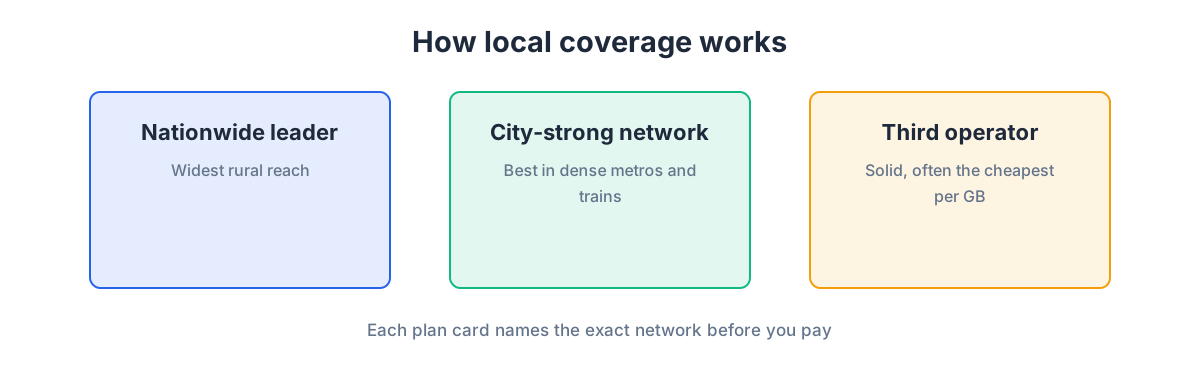
The reliable habit in Italy is to download offline maps before heading into the mountains or along a coastal cliff path. In the cities and along the fast trains your eSIM is effectively a local line; on a switchback above the Amalfi Coast, a cached map keeps you oriented even where the signal fades.
Sizing your data for Italy
An Italian trip leans on navigation, translation and a great deal of photography. Maps and messaging stay light once tiles cache. The heavier draws are social media as you post from a Roman rooftop, video calls home, evening streaming, and photo backups after a day among frescoes and coastline, and Italy generates a lot of photos.
The data-budget diagram breaks a day into buckets so you can total your own estimate rather than guessing at one number.
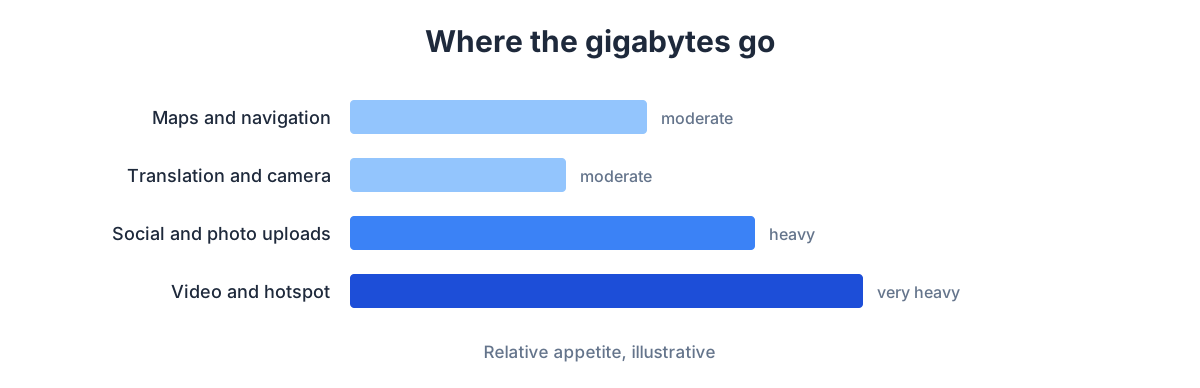
A light user who navigates and messages runs on a small daily allowance. A moderate user posting stories and taking the odd video call needs more. A heavy user streaming and uploading video should buy generously. Since top-ups take seconds in the app with no reinstall, start smaller and add data once your real daily use is clear. Our guide on how much data you need for a trip runs the same estimate with examples.
Setting up before you fly
Install the eSIM at home on Wi-Fi a day or two before departure. A traveler already at home provisions the profile there and simply switches it on after landing, keeping the delicate step off the arrival list. The flow is the same on iPhone and Android: buy the Italy plan and check the plan card, add the eSIM in cellular settings via QR or direct install, label it clearly like "Italy data", and enable data roaming for that travel line (you are roaming onto an Italian host network, but with no roaming charges on the GetSim plan). Set the travel line as your data line and keep your home number on the other line. The step-by-step is in how to install an eSIM on iPhone and Android.
Check compatibility first: recent iPhones, Pixels and flagship Galaxy phones generally support eSIM, and the definitive test is dialing *#06# for an EID or finding "Add eSIM" in settings, as the phone compatibility guide explains. To browse, open the eSIM plans or the full country list and add Italy alongside the rest of your route.
Off the plane and onto the rails
After landing, take the phone off airplane mode and the eSIM should register on an Italian network within a minute or two. Confirm the travel line is your data line and head for the train into town. Italy rewards a live connection: mobile rail and city-transit tickets, real-time updates when a regional train runs late, timed museum entries and restaurant bookings all assume you are online.
Keep the eSIM as your active data line rather than chasing café Wi-Fi, so transit and booking apps are always to hand, particularly useful in a city like Venice where a wrong turn costs real time. Remember too that a data-only plan cannot receive SMS: verification codes go to a phone number. If an Italian service, a bank, a booking site, or accommodation, insists on texting a code to a local number, a virtual number (a receive-only rented mobile number in the same app) receives it cleanly.
Beyond Italy: a wider European route
Italy is often part of a larger tour, with onward legs to France, Spain, or Greece. Because every plan lives in one app on a shared wallet, adding the next country is a matter of seconds, and for a route spanning several countries it is worth comparing a regional plan against separate single-country plans. The shared balance means one top-up carries over to whatever you activate next.
Travelers commonly pair Italy with neighbours they set up identically, such as a France eSIM for a Riviera crossing or a Spain eSIM for a Mediterranean loop. Each installs with the flow you already know, so the second country goes faster than the first.
Matching a plan to your Italy trip
Rather than one recommendation, match the plan to how you travel. The table is qualitative on purpose; exact data and price appear on the plan card at purchase.
| Trip style | What you'll do | Plan approach |
|---|---|---|
| Rome city break | Maps, buses, museums, social, evening streaming | Mid-size daily budget with evening headroom |
| Classic trio (Rome-Florence-Venice) | Fast trains, heavy navigation, lots of photos | Larger allowance, longer validity; cache maps for each city |
| Amalfi or Cinque Terre | Coastal trails, navigation with offline backup | Moderate plan; expect signal gaps on cliff paths |
| Business, few days | Email, calls over data, maps between meetings | Smaller allowance, short validity; top up on busy days |
The plan card is always the source of truth for network, data, validity and price, and unused, unactivated plans keep a 7-day refund, so buying a little ahead is risk-free.
No bill waiting when you get home
Cost certainty is a big reason travelers choose an eSIM for Italy instead of roaming. The plan is bought up front at the price shown on the plan card, so nothing meters against your home account and no bill trails you home. The setup that guarantees this is simple: keep your home SIM in the phone for your number but switch its data roaming off, and let the Italy eSIM carry all data on its fixed allowance, which you can watch in the app. If you near the limit you top up on purpose rather than discovering a charge later, and since top-ups are instant with no reinstall, starting with a modest plan and adding data as you go is a genuinely low-risk approach.
Two habits make an Italy plan go further. Send the heavy tasks, full-resolution photo backups, cloud sync, large app updates, over hotel or agriturismo Wi-Fi rather than the cellular allowance, since Italy inspires a lot of photos. And for couples or families, one generous plan shared by hotspot usually beats several small separate plans, because tethering behaves like a normal connection. On a wider European trip the shared prepaid wallet keeps every country in a single balance, so you top up once rather than managing an account at each border.
Italy-specific practicalities
Italy has a handful of quirks worth anticipating. Trains tie the country together, and the apps that hold your ticket and flag when a regional service runs late want a live connection, so keep the eSIM active on travel days rather than depending on station Wi-Fi. Major sights, the Vatican Museums, the Uffizi, the Colosseum, increasingly use timed-entry bookings held in an app, which assumes you are online when you turn up. Navigation is the other daily tool: Venice's alleys and the hill-town cores of Tuscany defeat any paper map, so an offline map plus a live signal is the combination that keeps you oriented. And if a day trip heads for the Dolomites, a small island, or a coastal trail, cache your route in the last town with full bars, because the most scenic stretches are precisely where the signal thins for locals and visitors alike.
Frequently asked questions
Does one Italy plan cover Rome, Venice and the coast?
Yes, an Italy plan is national and works everywhere. Only the underlying signal varies, strong in cities and along fast rail, patchier in remote mountains and on some coastal trails, as it is for local users.
Will it work in Venice's alleys?
Yes, coverage across Venice is good; the real challenge is navigation, not signal. Offline maps make the labyrinth manageable even where a GPS pin drifts among tall buildings.
Can I tether other devices?
Yes, tethering works like a normal line; the tethered device shares your plan's data, so size accordingly or top up if you plan to work online.
How do I receive an Italian verification text?
A data-only plan has no number to text, so pair it with a virtual number, a receive-only Italian line in the same app and wallet, and codes land there instead.
What about my home number?
Keep the home SIM seated so it still answers to your usual number, then switch off its data roaming. With that off, every data task rides the Italy eSIM and its prepaid allowance, and nothing quietly meters against your home operator while you are away.
Your last check before the airport
To bring it all together, a quick check the night before you leave saves any last-minute stress. Confirm eSIM support with the *#06# EID check if you have not already. Buy the Italy plan and read the plan card so you know your network, data, validity and price. Install the profile on home Wi-Fi and label the line clearly. Set data roaming on for the Italy line and off for your home line. Cache offline maps for Venice, the hill towns, and any coastal trails. And if an Italian service will need to text you a code, add a virtual number before you fly. Handle those six things and arrival day is just the train into the city.
Whether your Italy trip is a few days in Rome or a two-week arc from the Alps to the Amalfi Coast, the eSIM becomes the part you never think about once it is running. Your attention goes where it belongs, to the art, the food and the views, while the plan sits quietly in the background carrying your maps, your tickets and your messages. Setting it up before you leave is what makes that possible.
An Italy eSIM smooths the one thing that trips travelers up in an otherwise glorious country: staying oriented and connected across labyrinthine cities, fast trains and cliffside coast. Size your data around city days and photo-heavy excursions, install at home before you fly, keep your home number on a second line, and reach for a virtual number when an Italian service wants to text you a code. Then the only decisions left are the ones you came for, the espresso, the piazza, and the next train south.
Ready when you are
Put this guide to use on your next trip
Travel eSIMs that install in minutes and keep your home SIM active.