

Spain is one of those countries where you feel the difference a working data plan makes almost the moment you land. You step off the plane in Madrid or Barcelona, and suddenly you want maps to the apartment, a translation of the metro sign, the address of the tapas bar a friend recommended, and a way to tell the host you are ten minutes away. A Spain eSIM gives you all of that from the airport gate, without hunting for a shop or swapping a physical card. This guide walks through what coverage really feels like across the country, how much data a normal trip burns through, and exactly how to get set up before you leave home.
Photo: Logan Armstrong / Unsplash
Why an eSIM makes sense for Spain
An eSIM is a SIM that lives in software instead of a plastic tray. Your phone already has the hardware for it; buying a plan simply loads a new profile onto the chip. For a trip to Spain that means you can arrange your connection days in advance, keep your home number active for calls and bank codes, and arrive with data already waiting. There is no queue at a kiosk, no deposit, and no risk of losing a tiny card somewhere between the beach and the hotel.
GetSim sells data-first travel plans across 190+ destinations, Spain included, all managed from a single app and one shared prepaid wallet. Before you pay, the plan card shows you the network, the data allowance, the validity window and the price, so nothing is hidden behind the checkout button. If your plans shift, you can top up the same plan without reinstalling anything. And because most travel plans are data-only, the smart pattern is to keep your regular SIM in the phone for the odd verification text and let the eSIM carry the internet. If you also need a local-looking number to receive a booking confirmation or a two-factor code, a separate virtual number is a receive-only rented mobile number you can add on top.
Coverage: what to expect from Madrid to a village in Andalucía
Spain is well served in the places tourists actually go. In the big cities, Madrid, Barcelona, Valencia, Seville, Málaga, mobile data is dense and reliable, and you will rarely think about signal at all. The picture is best understood through the three-operator shape that most European markets share: a nationwide leader with the broadest reach, a strong challenger that is particularly solid in cities, and a third operator that competes hard on value. The diagram below shows that pattern without pretending every street corner behaves identically.
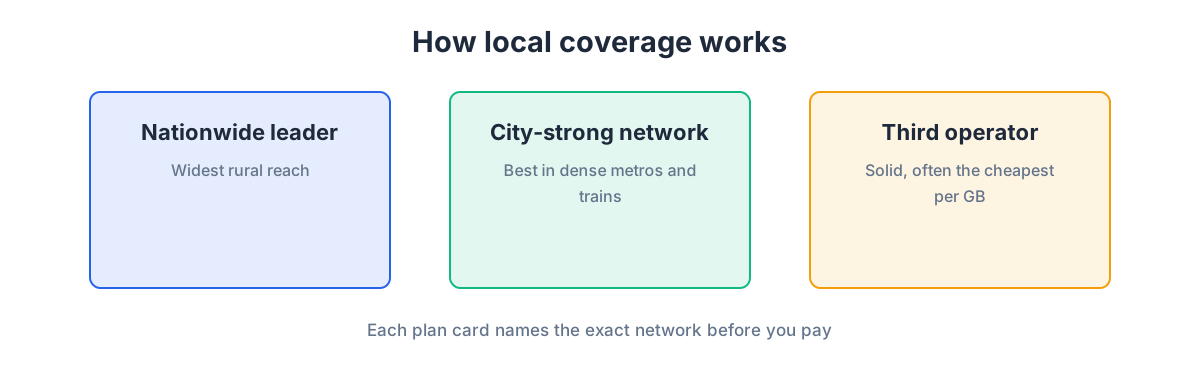
In practice, a travel eSIM connects to whichever partner network is available, so your job is not to pick an operator by name but to understand the terrain. Coastal resort areas, Costa del Sol, Costa Brava, the Balearic and Canary Islands, are generally well covered because they are busy year-round. Where you can expect the signal to soften is the deep countryside: the mountain roads of the Picos de Europa, remote stretches of the Camino de Santiago between villages, and the emptier parts of inland Aragón or Extremadura. It is rarely a total blackout, but data can slow or drop for a while. If a village hike or a rural drive is central to your trip, download offline maps and any important tickets before you set out.
Trains are their own small world. On the high-speed AVE lines you will move in and out of coverage as you pass through tunnels and cuttings, so treat onboard streaming as a bonus rather than a plan. For a long journey, queue up a podcast or a couple of episodes over hotel Wi-Fi the night before.
How much data do you actually need?
The honest answer is that it depends on how you travel, and the gap between a light user and a heavy one is enormous. Maps, messaging, mobile boarding passes and the occasional restaurant search barely register. What eats data is video: reels while you queue for the Sagrada Família, video calls home each evening, and streaming a series in bed. The budget diagram below sorts a typical trip into light, medium and heavy lanes so you can place yourself honestly rather than guess.
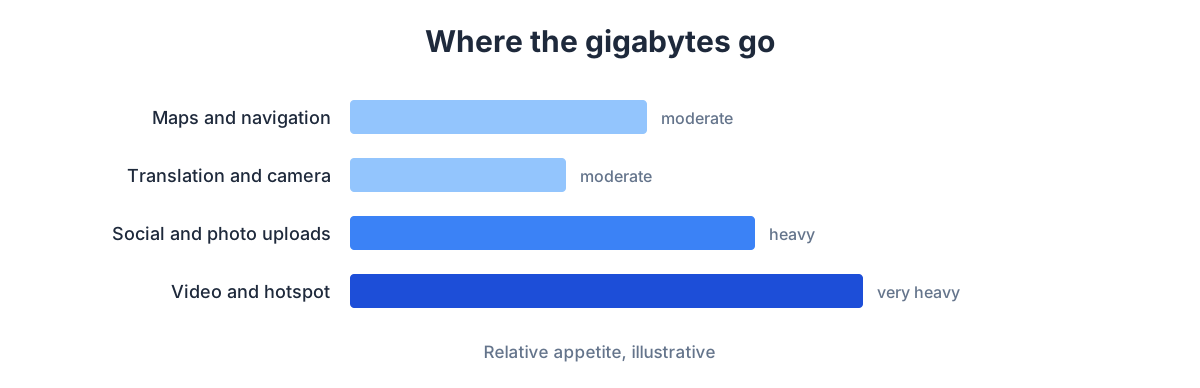
As a rule of thumb for a week in Spain: if you mostly navigate, message and post the odd photo, a small plan goes a long way. If you scroll social video daily and make regular video calls, step up to a mid-size allowance. If you expect to stream, hotspot a laptop for work, or share the connection with a partner, buy generously or plan to top up. The great thing about the shared-wallet model is that running low is not a crisis: you add data to the same plan in the app in under a minute, with no need to reinstall the profile or find a shop.
A quick comparison for planning
Different trip shapes call for different data strategies. This table pairs common Spain itineraries with a sensible approach. The sizes are relative guidance, not promises; your own habits are the real variable.
| Trip style | Typical daily use | Sensible approach |
|---|---|---|
| City break (3-4 days) | Maps, tapas hunting, photos | Small plan, top up only if you stream |
| Two-week tour | Daily navigation, social, some video calls | Mid-size plan, keep top-up handy |
| Beach and pool stay | Heavy social, streaming by the pool | Larger plan or plan to top up mid-trip |
| Remote hiking / Camino | GPS, offline maps, light messaging | Small plan plus offline downloads |
| Working remotely | Video meetings, hotspot to laptop | Large plan, expect to top up |
Setting up your Spain eSIM step by step
The single most important tip is timing: install the eSIM before you fly, while you still have your home Wi-Fi. Since you are travelling to Spain from elsewhere, you can set the whole thing up at home, keep it dormant, and switch it on when you land. That way you are never trying to download a profile on airport Wi-Fi with a boarding queue behind you.
- Check your phone supports eSIM. Most recent iPhones, Pixels and Galaxy S models do, but it is worth confirming before you buy. If you are unsure, our guide on how to check if your phone supports eSIM walks through the quick test.
- Buy the Spain plan on the GetSim app. The plan card shows the network, data, validity and price up front, so you know exactly what you are paying for.
- Install the profile over home Wi-Fi. The app guides you through adding the eSIM; on iPhone this lands in Settings under Cellular, on Android under Network and SIM.
- Label it clearly, something like "Spain data", so you can tell it apart from your home line.
- Leave data roaming off on the eSIM until you arrive. On landing in Spain, turn the eSIM on, set it as your data line, and you are connected.
If you want the full walkthrough with screenshots for both platforms, the step-by-step install guide covers every menu. Once it is running, keep your home SIM set for calls and texts and let the Spanish data plan do the heavy lifting.
Region by region: what changes as you move around
Spain is really several travel countries in one, and your connection experience shifts with the region. In and around Madrid, the transport-linked day trips, Toledo, Segovia, El Escorial, keep you in well-covered territory, and the high-speed rail hubs mean you are rarely far from a strong signal. Barcelona and the wider Catalonia coast are similar: dense in the city, dependable along the Costa Brava resorts, softer only when you climb inland toward the Pyrenees. Andalucía is where contrasts sharpen. Seville, Granada and Córdoba are comfortably covered, but the white villages of the Sierra de Grazalema and the mountain passes between them can drop you to a trickle of data, so cache your driving route and any accommodation details before you leave the last town.
The islands deserve a specific mention because so many trips centre on them. On Mallorca, Ibiza, Tenerife and Gran Canaria you will find strong coverage across the resort zones and main towns; the thinner spots are the volcanic interiors and remote coves you reach on foot. If a hike up to a miradors or a scramble down to a hidden cove is on your list, treat offline maps as standard kit. Galicia and the Camino de Santiago are their own case: the pilgrimage routes pass through long rural stretches where data comes and goes, and many walkers deliberately lean into that, downloading stage maps and albergue contacts in advance so a weak signal never becomes a problem.
eSIM or a local SIM bought in Spain?
It is a fair question, and the honest comparison comes down to friction rather than any invented numbers. A physical local SIM means finding a shop, sometimes showing ID, swapping out your home card and keeping it safe, and doing all of that in a language you may not speak, usually after a long flight. An eSIM removes every one of those steps: you arrange it at home in your own language, keep your home number in the phone, and arrive with data already running. You also keep the flexibility of the shared prepaid wallet, so the same account carries over to your next country without starting again. For a traveller who values landing ready and not thinking about logistics, the eSIM route is simply less hassle. The plan card showing network, data, validity and price before you pay also means you are never guessing what a counter is selling you.
There is one more quiet advantage. Because your home SIM stays put, any two-factor codes, bank confirmations or messages tied to your usual number still reach you. Travellers who swap in a full physical SIM sometimes discover mid-trip that they have cut themselves off from exactly the verification texts they need to book a train or confirm a card payment. Keeping both lines active, home number for identity, eSIM for data, sidesteps that trap entirely.
Money-saving habits that actually work
You do not need to overpay to stay connected in Spain. A few small habits stretch a plan a long way. Use hotel and café Wi-Fi for big downloads, app updates, photo backups and video calls, and save your mobile data for when you are out and about. Download offline maps of each city before you explore, and cache your route on long drives. If you and a travel companion are together most of the day, one generous plan shared by hotspot is often tidier than two half-used plans, though be aware hotspotting uses data faster.
Turn off automatic video autoplay in your social apps; it is the quietest data drain there is. And remember the 7-day refund policy: if you buy a plan and your trip falls through before you ever activate it, an unused, unactivated plan is refundable within seven days, which takes the risk out of buying early.
Frequently asked questions
Can I keep my normal number while using a Spain eSIM?
Yes. That is one of the main advantages. Your home SIM stays in the phone for calls and verification texts, and the eSIM carries your data in Spain. You simply choose which line handles data in your settings.
Do I need to be in Spain to install it?
No, and you should not wait. Install it at home over Wi-Fi before you fly, keep it switched off, and activate it when you land. Setting up on arrival is possible but far more stressful.
What if I run out of data mid-trip?
Top up the same plan in the app. There is no need to reinstall the eSIM or visit a shop, and the shared prepaid wallet makes adding data a one-minute job.
Will it work on the islands and along the coast?
Generally yes. The Balearics, the Canaries and the main coastal resort areas are busy and well covered. The weaker spots are deep countryside and mountain routes, where offline maps are your friend.
Can I get a Spanish phone number too?
The travel data plan is data-only, but if you need a number to receive codes or confirmations, you can add a receive-only virtual number separately.
Ready to connect
Spain rewards travellers who arrive ready: with maps loaded, tickets saved and a data plan already ticking over the moment they leave the airport. An eSIM makes that effortless. Browse the eSIM plans, check what is available for your dates on the countries page, and if your trip stretches across borders into France or Portugal, take a look at the regional plans that cover several countries at once. Set it up before you fly, and the only thing left to decide in Spain is which tapas bar comes first. For a wider primer, our explainer on what an eSIM is covers the basics in plain language.
Ready when you are
Put this guide to use on your next trip
Travel eSIMs that install in minutes and keep your home SIM active.